
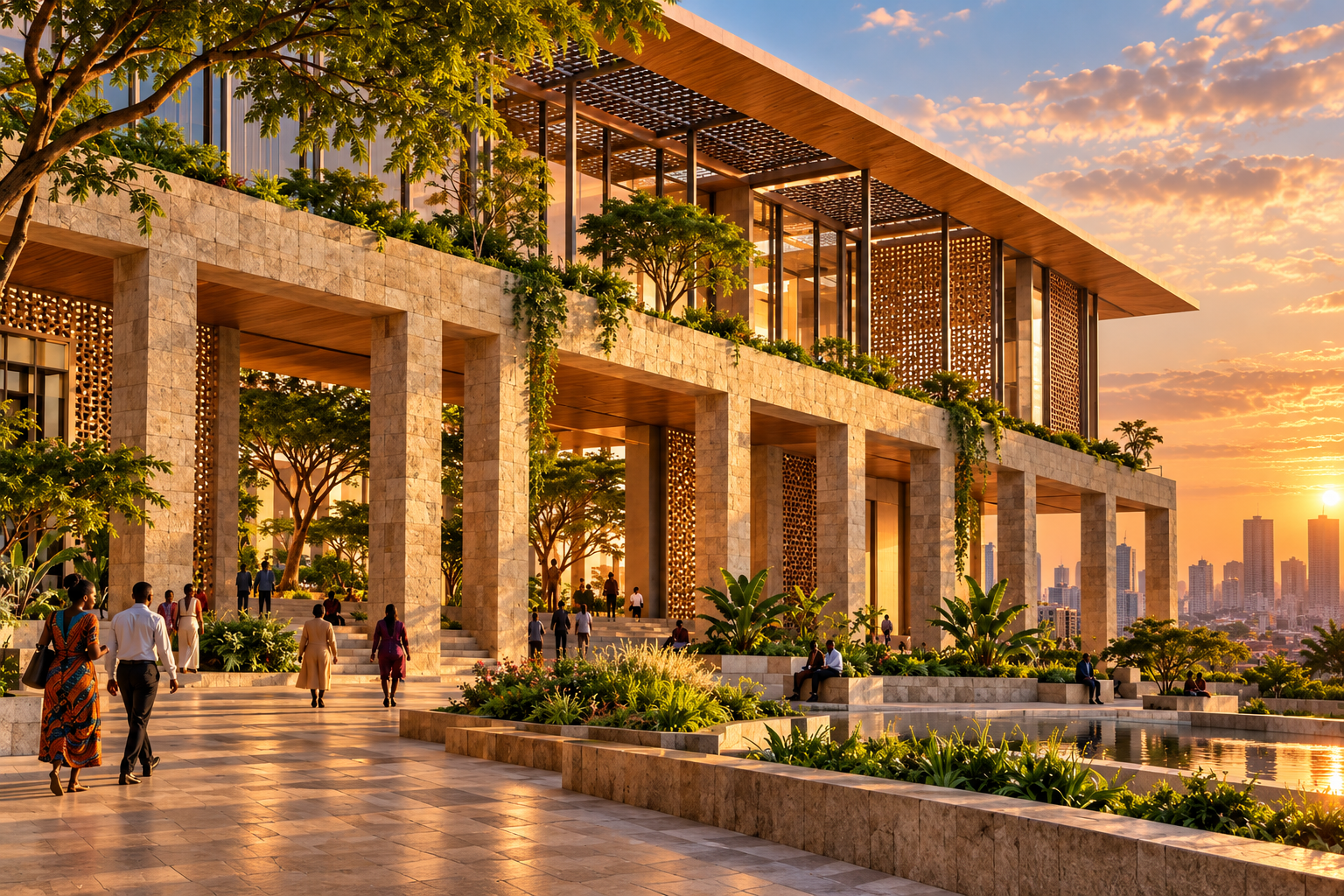
Architecture of Precedent or Architecture of the Future
How architects can learn from what came before without designing a world that has already passed
Architecture has always looked in two directions at once. One gaze turns backward, studying the buildings, cities, and traditions that have endured. The other looks ahead, imagining new ways of living in response to changing climates, technologies and social needs. The real question is therefore not whether architecture should choose precedent or the future. It is whether we can learn from the past without allowing it to limit what comes next.
The comfort and danger of precedent
Precedent is one of architecture’s most valuable tools. It shows how others solved questions of structure, proportion, circulation, climate and community. A courtyard can demonstrate how a building creates privacy while drawing in light. A deep veranda can reveal how shade becomes both environmental protection and social space. A well-planned street can teach us why human scale matters more than monumental form.
Yet precedent becomes dangerous when it is treated as a catalogue of appearances. When architects borrow the roof, façade or silhouette of a celebrated project without understanding the conditions that produced it, learning turns into imitation. The copied image may survive, but its intelligence is lost. A solution developed for a dry climate, a different economy or another pattern of family life cannot automatically answer the realities of Nairobi, Kisii, Nanyuki or the Masai Mara.
What deserves to be carried forward
The strongest precedents are not necessarily the buildings that look most impressive. They are the ones that reveal durable principles: orientation before mechanical cooling, shade before tinted glass, adaptable rooms before rigid programmes, local skill before imported complexity, and public space before architectural spectacle.
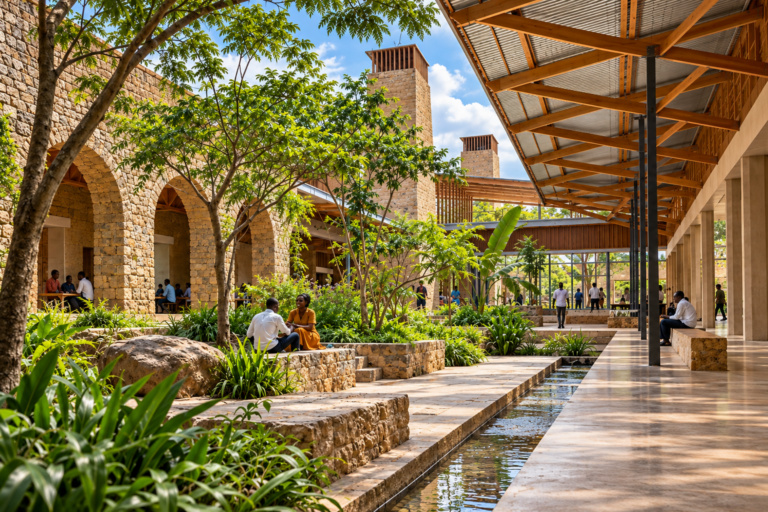
Across Africa, many traditional environments already embody this intelligence. Their lessons are found in shaded thresholds, layered privacy, collective courtyards, breathable envelopes, locally available materials, and structures that can be maintained by the communities that use them. Respecting this knowledge does not mean reproducing the past literally. It means recognising that long-standing spatial wisdom can be translated into contemporary architecture without being reduced to decoration.
The future is not a style
Too often, ‘future architecture’ is presented as a visual language of smooth glass, dramatic curves and technological display. But the future is not an aesthetic. It is a set of conditions architects must be prepared to address.
Rapid urban growth, climate uncertainty, resource pressure, housing inequality and changing patterns of work will shape the next generation of buildings far more deeply than any fashionable façade. Architecture of the future may therefore appear quieter than expected. It may be a building that uses less energy, accepts different uses over time, harvests water, supports biodiversity, reduces embodied carbon and remains repairable long after its opening photographs are taken.
Designing for an African future
For African cities, the future cannot simply be imported from global renderings. It must grow from local realities: informal and formal economies existing side by side; intense demand for affordable housing; young and expanding urban populations; valuable craft traditions; uneven infrastructure; and climates that make passive design a necessity rather than an optional environmental gesture.
This creates an opportunity for architecture that is both globally informed and unmistakably rooted. Digital fabrication can work with local craft. Advanced environmental modelling can refine the familiar logic of courtyards, screens and cross-ventilation. Modular construction can shorten delivery times while allowing homes and institutions to expand. New materials can reduce carbon, but their value will depend on availability, maintenance and cultural acceptance. Innovation becomes meaningful when it improves everyday life, not merely when it produces an unfamiliar form.
From object making to system thinking
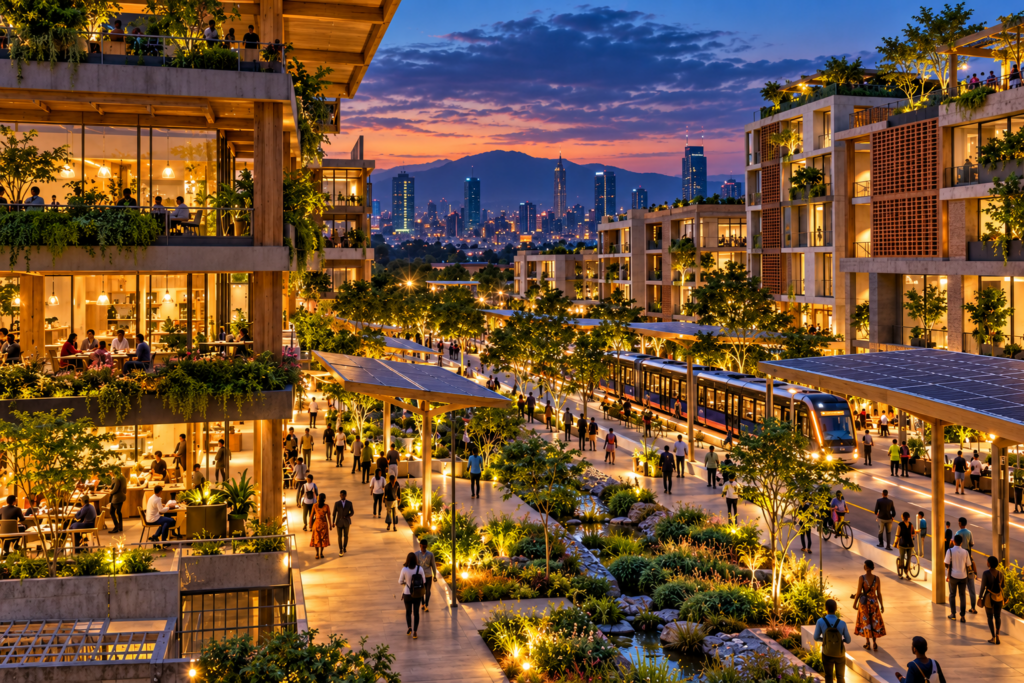
The future also asks architects to think beyond the individual building. A beautiful project can still fail if it is disconnected from transport, water, public space or the people it is meant to serve. Architecture must increasingly operate as part of a larger system.
This means asking wider questions. Can the ground floor contribute to the street? Can landscape manage stormwater as well as create beauty? Can a building change use rather than be demolished? Can its materials be repaired, reused or returned safely to the earth? Can the project support local employment and knowledge? These questions shift architecture from the production of isolated objects toward the design of resilient relationships.
A critical position between memory and possibility
The most convincing architecture rarely chooses between history and invention. It occupies a more demanding position between them. It studies precedent critically, separates principle from appearance and then tests that knowledge against present needs.
In this approach, the past is neither rejected nor romanticised. It becomes evidence. Technology is neither worshipped nor feared. It becomes a tool. The architect’s role is to bring the two into a productive conversation while remaining accountable to place, climate, cost and human dignity.
Architecture that deserves the future
Perhaps the question is not whether a building looks futuristic, but whether it deserves to exist in the future. Will it continue to serve people as their needs change? Will it consume more than its context can sustain? Will it deepen belonging or replace it with a borrowed identity? Will it age with dignity, or become obsolete as soon as its image loses novelty?
Architecture of the future will not emerge from forgetting precedent. It will emerge from understanding it deeply enough to move beyond imitation. The buildings that matter will carry memory without becoming trapped by nostalgia, use technology without becoming controlled by it, and pursue originality without losing sight of the people who must live with the result.
The future, then, is not a destination architecture eventually reaches. It is a responsibility embedded in every decision we make now.
Recent Posts
Recent Projects


Gwiji offers innovative architectural solutions, specializing in sustainable design, urban planning, interior design, and project management for residential and commercial spaces. With a passion for creativity and a commitment to excellence, we blend artistry and functionality to craft interiors that reflect our clients' unique personalities and aspirations.
Contact Us
- Nairobi, Kenya
- + 254 716 597 772
- info@gwijigroup.com